
If you spend any time in merchant cash advance broker communities right now, you’ll notice the same argument playing out on repeat. Someone posts a version of the same warning: stop buying leads, almost all of them are garbage. The post gets dozens of comments. Half the room agrees enthusiastically. The other half (usually people who sell leads for a living) jump in to defend the practice, insisting that with the right dialer, the right follow-up cadence, and the right mindset, “aged” or resold leads can still get funded deals.
Both sides are sort of right. And that’s exactly the problem.
The Core Complaint, Stripped of the Noise
The argument against buying leads usually comes down to a simple piece of logic: if someone had actually built a reliable way to generate consistent, high-intent MCA leads, why would they sell that system to you instead of running it themselves and keeping 100% of the funded revenue? A lead package costs a few thousand dollars. A single funded MCA deal can be worth far more than that in commission. If the leads were genuinely great, the math doesn’t favor selling them off cheap to strangers.
One broker in a recent industry discussion said it plainly: buying these packages feels a lot like being sold something addictive by someone who knows exactly how desperate you are to close your next deal. You pay upfront, you get burned, and because you’re one deal away from making your money back, you go buy another package. It’s a rough analogy, but it captures something real: the incentive structure of the “sell packages to brokers” business model doesn’t reward the seller for the leads actually converting. It rewards them for the sale of the list itself.
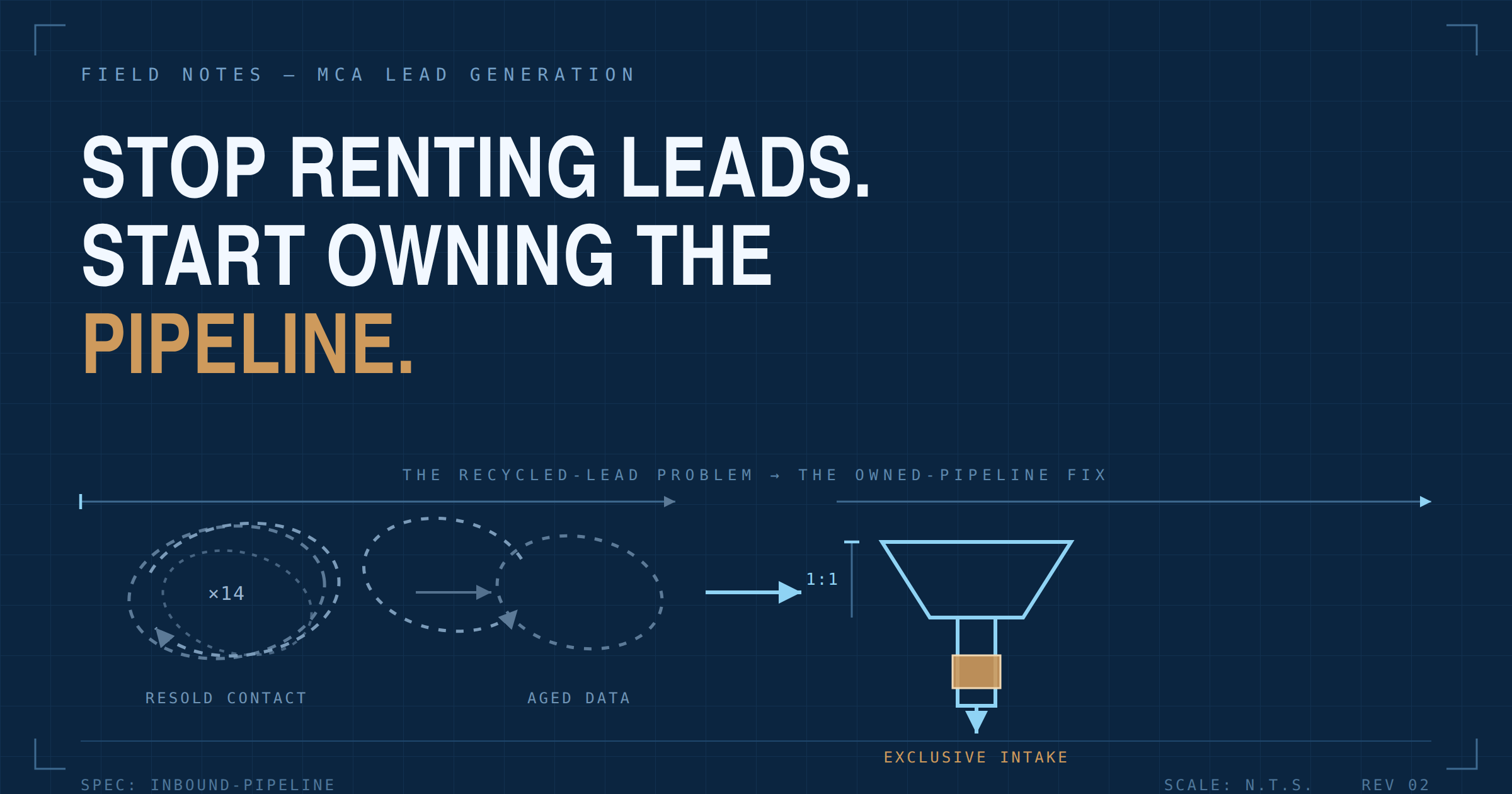
And the data backs up the frustration. Leads that get sold as a “package” have frequently already been pulled from a UCC filing, resold from a CRM export, or run through a Google or Meta ad campaign and passed to five, ten, or twenty other brokers before you ever pick up the phone. By the time you dial, the business owner has already heard the same pitch from three other people that week. You’re not generating interest; you’re competing for the last shred of attention left in an already-exhausted contact.
The Counterpoint Worth Taking Seriously
To be fair to the other side of the argument: not every lead seller is running a scam, and not every “aged” lead is dead. Several experienced voices in the industry pushed back on the blanket “leads are garbage” take, and they raised a genuinely useful distinction: the difference between demand generation and demand fulfillment.
The argument goes something like this: a media buyer’s skill set is creating attention and intent at scale through paid ads and direct response marketing. That’s a completely different skill set from underwriting, structuring, and closing an MCA deal. Expecting the person who’s great at generating traffic to also be the best-positioned person to close the funding is a bit like expecting a farmer who grows great produce to also run the restaurant that serves it. Different expertise, different business.
There’s truth in that. The issue isn’t that lead generation as a discipline is fake. The issue is what happens to a lead after it’s generated: how many times it gets resold, how long it sits before someone calls it, and how transparent the seller is about all of that. A hot, real-time, exclusive lead generated yesterday for one broker is a completely different product than a “package” of six-month-old contact data that’s been circulating through the same three or four Facebook lead-gen operators, all with UCC filings from the same recycled data pull.
The brokers who are actually funding volume every month aren’t relying on luck with bought lists. They’re the ones who’ve either built serious paid-ad infrastructure themselves, or they’ve found a genuinely exclusive source and paired it with real follow-up systems: multi-channel dialers, text and email sequences, and fast response times. The list matters, but speed and systems around the list matter just as much, maybe more.
So What’s Actually Broken?
Pulling this apart, the real problem in the MCA lead economy isn’t “lead generation is fake.” It’s three specific structural issues:
1. No exclusivity. Most bought leads have been sold multiple times. You’re rarely the only broker calling that business owner, which means you’re not selling; you’re racing.
2. No freshness. A lead that converts well within the first hour of intent can be nearly worthless a week later. Most packages are, by definition, aged before you even receive them.
3. No ownership of the pipeline. When you buy leads, you’re renting someone else’s traffic for a single transaction. You get zero compounding value: no growing list of past prospects, no retargeting pool, no brand recognition with the business owners in your market. Every dollar you spend disappears the moment the list is used up. You’re always starting over.
That third point is the one brokers underestimate the most. Buying leads doesn’t build an asset. It’s a recurring expense that never turns into infrastructure.
Why We Built an Automated Inbound System Instead of Selling Lists
This is exactly the gap I’ve been building for clients in the MCA space, and it’s a fundamentally different model from the “buy a package” approach that dominates the industry.
Instead of renting access to a stranger’s recycled contact list, the system is built to generate inbound, first-party demand that belongs entirely to the client: merchant owners who are actively expressing interest because they’re looking for capital right now, not people cold-pulled from a UCC filing or a data broker’s spreadsheet.
Here’s the general shape of how a system like this addresses each problem raised above:
Solving the exclusivity problem. Every lead the system generates is created specifically for one client’s campaign. There’s no reselling, no shared list, no other broker calling the same business owner five minutes before you do. The demand is built from scratch for that business, using that business’s own offer, landing pages, and ad creative, not a shared funnel that a dozen other brokers are also plugged into.
Solving the freshness problem. Inbound systems built around intent (search, targeted paid social, retargeting, and conversion-optimized landing pages) capture a business owner at the moment they’re actually thinking about capital, not months after the fact. Automated qualification and instant response mean the gap between “business owner submits interest” and “broker makes contact” can be measured in minutes, not days. Speed-to-lead is one of the single biggest predictors of MCA conversion rates, and it’s something a stale purchased list can never replicate no matter how good the dialer is.
Solving the ownership problem. This is the part that actually changes a broker’s business long-term. Every lead that comes through an owned inbound system adds to a growing, compounding asset: a retargeting audience, a nurture list, a base of past prospects who can be re-engaged for future offers. Instead of a recurring expense that evaporates the second the list runs dry, the client is building infrastructure: their own funnel, their own data, their own repeatable acquisition channel that gets more efficient over time as the ad accounts and landing pages accumulate performance data.
What This Actually Looks Like in Practice
Set aside the marketing language, and a functioning automated inbound lead gen system for an MCA broker generally has a few core components working together:
- Intent capture: paid search and social campaigns built around business owners actively searching for funding, working capital, or specific triggers like “denied for a bank loan” or “need cash for equipment/payroll.”
- Conversion-optimized landing pages: pages designed specifically to qualify serious applicants, not just harvest emails, so the leads that come through already meet basic funding criteria.
- Automated qualification and instant routing: chat and form-based intake that pre-qualifies revenue, time in business, and use of funds before a human ever gets involved, and routes qualified leads to the broker’s phone or CRM in real time.
- Follow-up automation: text, email, and call-task sequences that fire immediately and continue nurturing prospects who aren’t ready to close on the first call, since a meaningful share of MCA deals close on the third, fourth, or fifth touch, not the first.
- Full attribution and reporting: the client can see exactly what each lead cost, where it came from, and how it performed, which is the opposite of the black-box experience of buying a package and hoping.
None of this requires the broker to become a media buyer themselves. It just means the acquisition channel is built, owned, and optimized specifically for their business, instead of being borrowed from someone else’s recycled list.
The Real Question to Ask Before Buying Another Package
Before spending another few thousand dollars on a “guaranteed” lead package, it’s worth asking the same question that keeps coming up in broker forums: if this data were actually great, why is it being sold instead of worked? Plenty of individual lead providers do solid work, and follow-up systems genuinely do matter. But the fundamental economics of the resold-list model mean brokers are almost always working with someone else’s leftovers.
The alternative isn’t complicated in concept, even if it takes real infrastructure to execute well: stop renting access to other people’s exhausted contacts, and start owning a pipeline that’s built specifically to bring qualified, ready-to-fund business owners directly to you: fresh, exclusive, and fast enough to actually convert.
Owning that pipeline, instead of renting someone else’s, is what actually builds a brokerage long-term.
